Navigating the maze of visa regulations and employment authorization is a vital step for international students aspiring to study and work in the United States. Understanding these legal intricacies not only ensures a smooth academic journey but also opens doors to valuable work experience during and after studies.
Understanding Visa Categories and Their Implications on Employment
For international students, choosing the appropriate visa type lays the foundation for their study and work activities in the U.S. The most common student visas include the F-1, J-1, and M-1, each with unique privileges and limitations regarding employment.
The F-1 visa is the predominant choice for academic students enrolled full-time. This visa permits on-campus employment of up to 20 hours per week during semesters and full-time during breaks. Additionally, F-1 holders may pursue Curricular Practical Training (CPT) for internships tied to their curriculum and Optional Practical Training (OPT) for up to 12 months post-graduation. Notably, STEM graduates can receive an extension of up to 36 months.
The J-1 visa, mainly designed for exchange students, allows on-campus jobs with program sponsor approval. These visa holders can participate in Academic Training (AT), providing up to 18 months of work related to one’s field of study either during or after their program.
Conversely, the M-1 visa supports vocational students but is significantly more restrictive. Work options are limited to practical training after study completion, capped at one month per four months of instruction, with no authorization for on-campus employment during study periods.
Key Documentation for Work Permit Applications
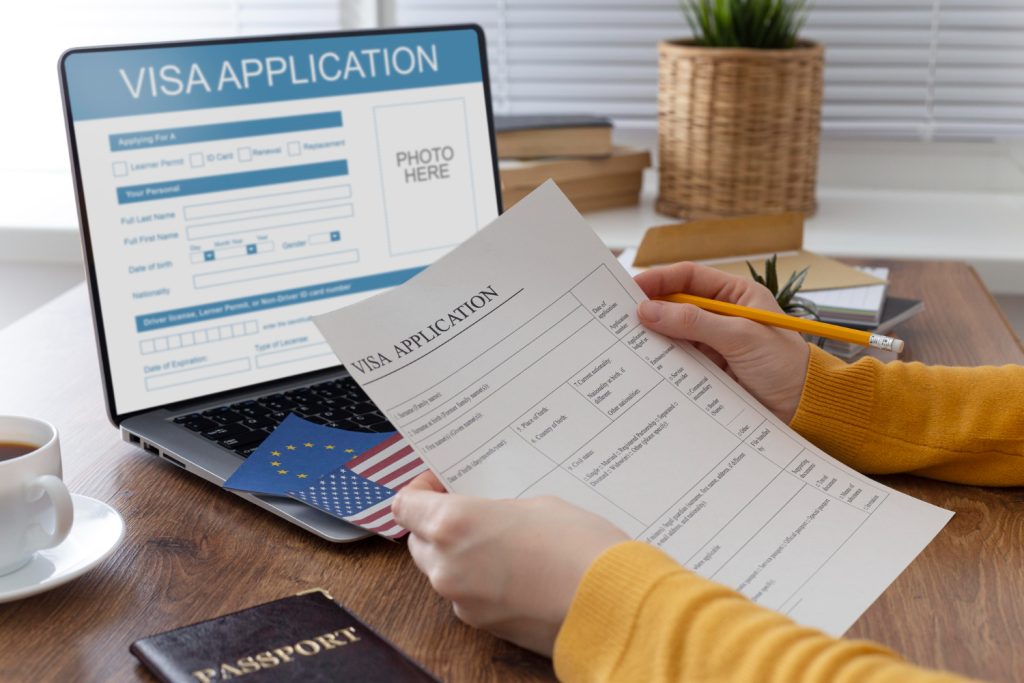
Securing authorization to work legally as an international student requires precise documentation. Properly assembling these papers is crucial to avoid processing delays and comply with immigration rules.
A valid Form I-20 serves as the backbone of the application, certifying full-time enrollment in a Student and Exchange Visitor Program-approved institution. Alongside this, students must submit Form I-765, the official application for employment authorization.
Additional important documents include copies of a current passport and visa, recent passport-style photos, proof of student status such as enrollment verification, and an up-to-date I-94 arrival/departure record. For employment authorization related to CPT or OPT, an approval letter or recommendation from the designated school official (DSO) is essential.
Financial evidence through bank statements or sponsor letters demonstrating sufficient funds helps fulfill USCIS’s requirements, showcasing that students can support themselves without unauthorized work.
Maintaining Visa Compliance: Tips for International Students
Adhering to visa regulations is paramount. Unauthorized employment can jeopardize a student’s legal status, resulting in visa revocation or deportation.
Students should always maintain a valid status, regularly consult their university’s international office, and keep their documentation updated, especially their ISSEVIS and Form I-20 records with accurate employment endorsements.
Understanding the timelines associated with work permits, such as applying for OPT no earlier than 90 days before program completion and no later than 60 days after, assists in timely submissions. Similarly, CPT must be authorized before starting any off-campus work.
Furthermore, international students must avoid working beyond the hours permitted on their specific visa and ensure their employers comply with employment verification rules, including Social Security Number (SSN) eligibility.
Comparison Table: Employment Opportunities by Student Visa Type
Visa Type
On-Campus Employment
Off-Campus Practical Training Options
F-1 Visa
Up to 20 hours/week during school; full-time breaks
CPT (internships/co-op), OPT (12-36 months for STEM)
J-1 Visa
Allowed with sponsor approval
Academic Training (up to 18 months)
M-1 Visa
Not permitted during studies
Practical training post-completion, limited duration
Summary
International students wishing to work while studying in the United States must understand the scope and requirements of their visa category. By ensuring compliance with visa regulations, submitting the correct documentation such as Form I-20 and Form I-765, and recognizing employment limits tied to their visa, students can optimize their academic and professional experiences legally and effectively. Proper planning and consultation with institutional advisors play an indispensable role in this process.
If you are an international student seeking assistance with your visa status or work permit applications, contact a specialized immigration consultancy today. Expert guidance can streamline your path to lawful employment and enrich your educational journey in the U.S.
 Students should always maintain a valid status, regularly consult their university’s international office, and keep their documentation updated, especially their ISSEVIS and Form I-20 records with accurate employment endorsements.
Understanding the timelines associated with work permits, such as applying for OPT no earlier than 90 days before program completion and no later than 60 days after, assists in timely submissions. Similarly, CPT must be authorized before starting any off-campus work.
Furthermore, international students must avoid working beyond the hours permitted on their specific visa and ensure their employers comply with employment verification rules, including Social Security Number (SSN) eligibility.


