
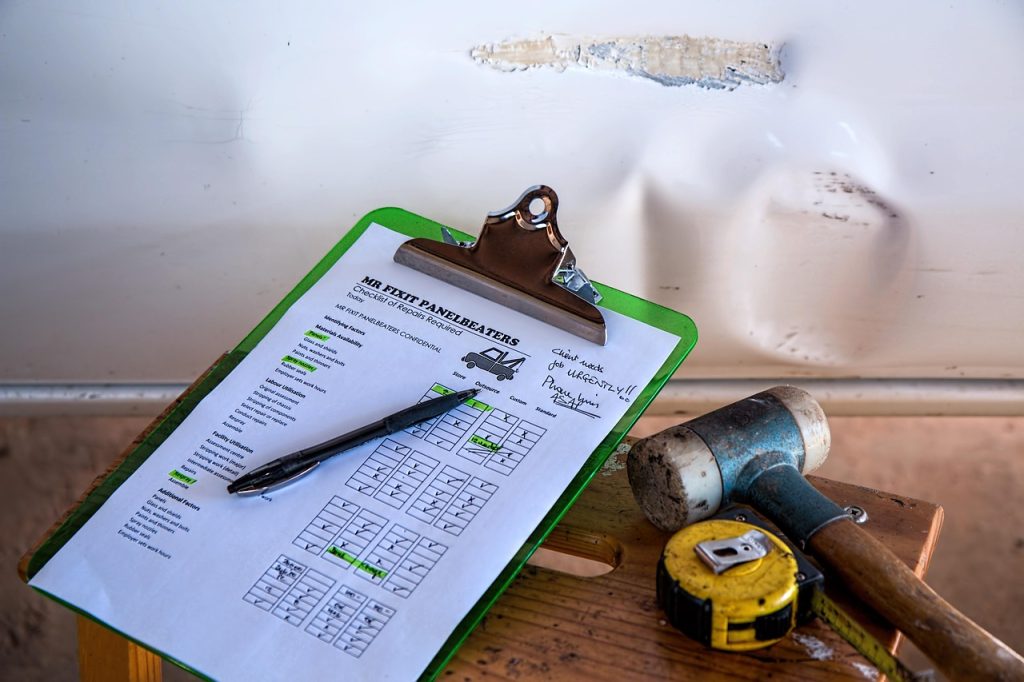
When an insurer considers an application, it is not simply deciding whether to say yes or no. Underwriters examine how likely a claim may be, how severe its financial impact could become, and whether the requested protection fits the applicant’s circumstances. This structured Risk assessment helps insurers decide which risks they can accept and what policy terms are appropriate.
Risk assessment methods that shape underwriting decisions
Underwriting begins with collecting information about insurance subscription and checking whether it is complete and consistent. Depending on the policy, an insurer may review application responses, financial statements, health records, property details, occupation, and prior claims. The aim is not to gather data indiscriminately, but to identify factors that materially change the probability or potential cost of a loss.
For the bakery, a recent electrical upgrade may reduce fire exposure, while repeated water-damage claims could point to an unresolved maintenance issue. Underwriters compare these details with established guidelines, then decide whether they need clarification, additional documents, or an expert review. The quality of the evidence matters as much as its volume.
Several assessment methods commonly work together, each revealing a different part of the risk:
- Loss history review: Previous claims can reveal recurring incidents, their causes, and the effectiveness of corrective measures.
- Exposure analysis: Insurers identify the people, property, activities, and locations that could generate a claim.
- Risk classification: Applicants are grouped according to relevant characteristics so similar risks can be assessed consistently.
- Actuarial analysis: Statistical models use historical patterns to estimate claim frequency, severity, and uncertainty.
Underwriting evidence across people, property, and finances
The evidence underwriters request varies by insurance line. For life or health cover, an insurer may consider relevant medical history and, where permitted and appropriate, clinical reports or examinations. For commercial property, it may examine construction, building use, protective systems, maintenance, and nearby hazards.
Medical information must be handled carefully and assessed within applicable legal and privacy requirements. A health-related decision should be based on relevant evidence, not assumptions; readers seeking background on the relationship between exercise programs and health standards can consult this overview of health standards for senior exercise programs. The broader principle is that specialized information needs context and responsible interpretation.
For physical assets, a Property inspection can uncover details a form cannot: worn wiring, inadequate drainage, or an unprotected storage area. An inspection also gives the applicant a chance to document improvements. A practical discussion of the role of professional inspections appears in this guide to professional property inspections.
Actuarial analysis and premium calculation
Underwriters draw on actuarial tables and statistical models to compare an individual application with broader experience. Techniques such as regression, survival analysis, and frequency-severity modeling can estimate how often claims may occur and how costly they might be. The models do not predict an individual future with certainty; they support consistent decisions across many cases.

This work informs Premium calculation, coverage limits, deductibles, and sometimes exclusions or other policy conditions. For the bakery, stronger fire protection might improve its risk profile, while a high-hazard location could still affect terms. The final decision balances estimated losses, operating costs, regulatory obligations, market conditions, and the insurer’s appetite for risk.
The relationship between common evidence and underwriting decisions can be summarized as follows:
| Assessment method | Evidence considered | Possible underwriting use |
|---|---|---|
| Loss history review | Prior claims, causes, frequency, and repairs | Identify recurring patterns or effective corrective action |
| Property inspection | Building condition, safety measures, and local hazards | Set suitable limits, conditions, or risk improvements |
| Actuarial analysis | Historical claims and relevant population data | Estimate expected losses and support consistent pricing |
| Financial review | Relevant financial records and payment information | Assess permitted indicators and verify application details |
Risk classification, limits, and changing exposures
After examining the evidence, an insurer assigns a Risk classification and determines how the requested protection can be offered. The result may be approval on standard terms, adjusted limits or deductibles, specific exclusions, a request for further information, or a decline. Restrictions should reflect the assessed exposure and be stated clearly so the policyholder understands what is and is not covered.
Risk does not stand still after a policy begins. A bakery may add a delivery service, install new equipment, or move into a flood-prone area; each change can alter its exposure. Insurers therefore use renewal reviews and updated information to keep coverage aligned with the business rather than relying indefinitely on an old application.
Ultimately, sound underwriting combines structured methods, reliable evidence, and human review. A qualified insurance professional can help interpret policy terms and assess whether the proposed cover fits a particular person, property, or business.